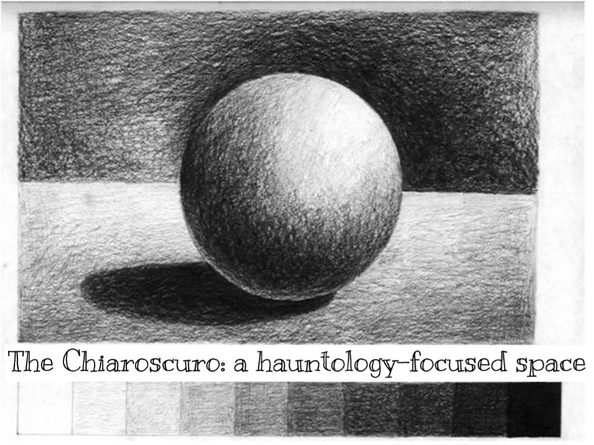
A series of journals in which Lance Peng contemplates his teaching practice.
Ambiguity, it turns out, is everywhere in teaching. Not just in the big theoretical sense but in the tiny emotional shifts of the classroom, in the between certainty and not-knowing, in the uncomfortable but generative spaces where I’m not entirely sure what I’m doing and perhaps neither are my students.
And that’s the bit I keep returning to: ambiguity not as an obstacle but as a strategy. Uncertainty not as a gap but as a dimension.
When I try to tease apart the difference, I realise I’ve been operating with both for years, sometimes deliberately and sometimes by accident.
Ambiguity for me has always been about multiplicity. A poem with too many possible meanings. A political cartoon that refuses to settle. A moment of classroom tension where interpretation shifts depending on who’s looking.
Ambiguity lives in my favourite kinds of learning....the ones full of “maybe”, “could be”, “depending on how you see it” and that delicious space where the room leans in because no one can rely on the answer key.
Uncertainty, though, is different. It’s the sensation of not having enough information or of stepping into something without knowing what comes next. Unlike ambiguity, which expands, uncertainty unsettles.
It’s the science experiment that might work/fail spectacularly.
It’s the discussion that veers into an unexpected emotional territory.
It’s the moment a student asks a question I genuinely cannot answer.
And in those moments, Polanyi’s “we know more than we can tell” feels painfully accurate. So much of teaching (learning too!) pulls from tacit knowledge, that half-articulated sense of “I’ll know what to do once I’m already doing it”.
Which, if I’m honest, is exactly how I’ve been handling this module.
It’s been a long time since I taught in secondary school and even when I did, it wasn’t for very long. I’m increasingly aware that the tacit knowledge I lean on now was built in other dimensions: research supervision, university spaces, my own slipping-between-identities academic life.
So when students ask for practical strategies like real ones, not the poetic, monstrous, hauntological metaphors I can produce in my sleep, I feel a sting of uncertainty. A little shame maybe. Or the suspicion that my planning still leans too heavily on ideas and not enough on actionable steps.
Some of them have started saying (kindly but clearly) that they feel a bit lost.
They’re intrigued by the ambiguity, the “dark pedagogy”, the creative unknowns but they don’t quite know how to use any of this within actual school systems.
And I get it!
Because sometimes I don’t know either....
The thing that steadies me is complexity theory. Leanne Gibbs’ gloriously messy depiction of learning.
I find relief in her insistence that learning is not linear. It’s not a staircase. It’s a tangle. A weather pattern. A field of glitches. A child’s drawing done while half daydreaming.
When my students seem lost….maybe they actually are in the middle of learning?
When my teaching feels uncertain….maybe that’s exactly what it should be?
When ambiguity feels like a void….perhaps it’s simply the precondition for creativity?
That’s the thing I keep reminding myself:
Ambiguity opens possibilities.Uncertainty builds adaptability.Complexity explains why nothing ever goes to plan.
And in between the three, there is room for tacit knowledge to emerge, to guide, to improvise — for me and for them.
So here I am, in the middle of my own wobble again, trying to figure out what “practical” even means in a pedagogy that embraces mess. I keep returning to three approaches, not as rules, but as reminders:
Open-endedness isn’t laziness, it’s an invitation.
Letting students explore multiple interpretations or methods can be structured without being rigid.
Messy moments aren’t mistakes, they’re part of the design.
I can plan for emergence: set the conditions, not the outcomes. Exploration is the learning, not the polished answer at the end. Even my own uncertainty can model a different way of knowing.
Still I’m aware that I need to articulate these in more grounded terms, not just theoretical ones. My students aren’t wrong: ambiguity is alluring but it needs scaffolding. Uncertainty is powerful but not if it becomes abandonment.
I’m still working out what that looks like....
So, this week’s journal feels like a confession:
I am thinking a lot about ambiguity and uncertainty and also living fully inside them.
My teaching is full of the unknown, both by design and by accident.
My lectures maybe need more anchors.
My students want something they can take into real classrooms and I want to honour that without collapsing the beautiful complexity of learning into bullet points.
Perhaps this, too, is a form of tacit knowledge: the understanding that teaching is always a negotiation between clarity and opacity, structure and improvisation, certainty and its opposite.
And maybe that’s what I’m ghostwriting here, my own reminder that the half-lit spaces, the dark pedagogies, the ambiguous dimensions are still legitimate, still generative, as long as I keep them connected to the real humans in front of me.
In the soft uncertainty and the messy middle where learning (mine and theirs) continues to surface for a moment.
No comments:
Post a Comment